PRACTICAL NOTE 01 / DRAWING
Using Hand Photos as a Drawing Reference
Hands are the part most artists redraw the most. Fingers foreshorten, knuckles land in the wrong place, and a grip that felt right in the head falls apart on paper. A good reference photo fixes half of that before you draw a line.
What to look for in a hand reference
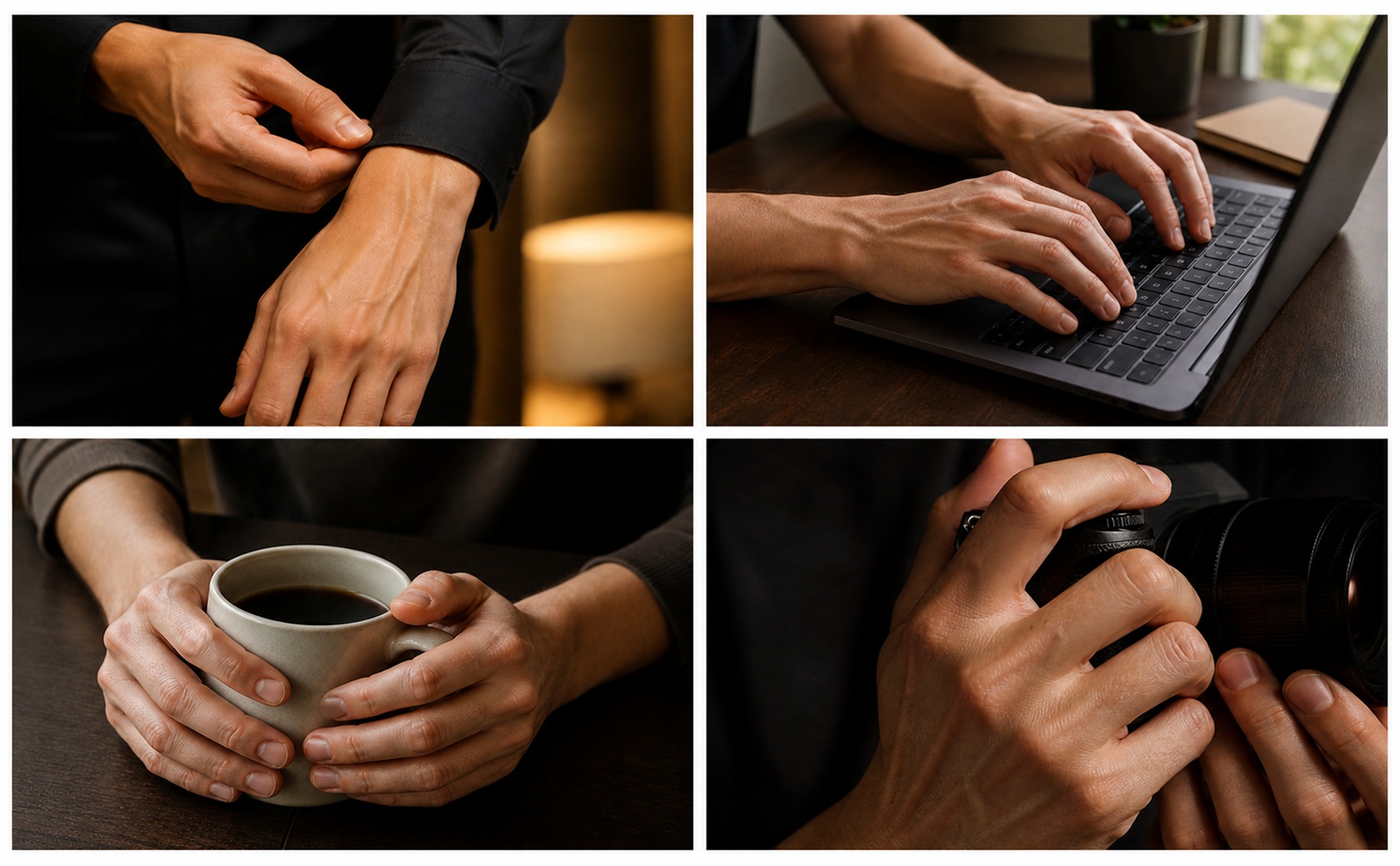
Three things matter more than resolution: a clear light direction (so tendons and veins tell you where the form turns), an honest angle (most real grips are seen from slightly above, not straight on), and an object in the hand (an empty posed hand teaches less than a hand holding a cup, a pen, a doorknob — the object explains the tension).
Tendons and veins are your form lines
On the back of a hand, the extensor tendons fan from the wrist to each finger. When a finger presses down, its tendon rises; when the hand relaxes, they sink. Veins run looser and cross the tendons — drawing both, lightly, is the fastest way to make a hand look alive rather than inflated.
Grips worth practicing
A wrap grip (mug, umbrella handle), a pinch (watch crown, page corner), a press (light switch, piano key), and a working pair (tying laces, opening a jar). Each uses a different set of knuckles as the “highest point” — find it first, and the rest of the hand hangs off it naturally.
Our books in the Shape series collect exactly these situations: one hand, one everyday object, one clear window light, no faces and no captions. They are AI-generated images, disclosed as such, and made to be stared at slowly.
All images were generated using AI. Any resemblance to real persons or organizations is unintended.
01 / MOTION
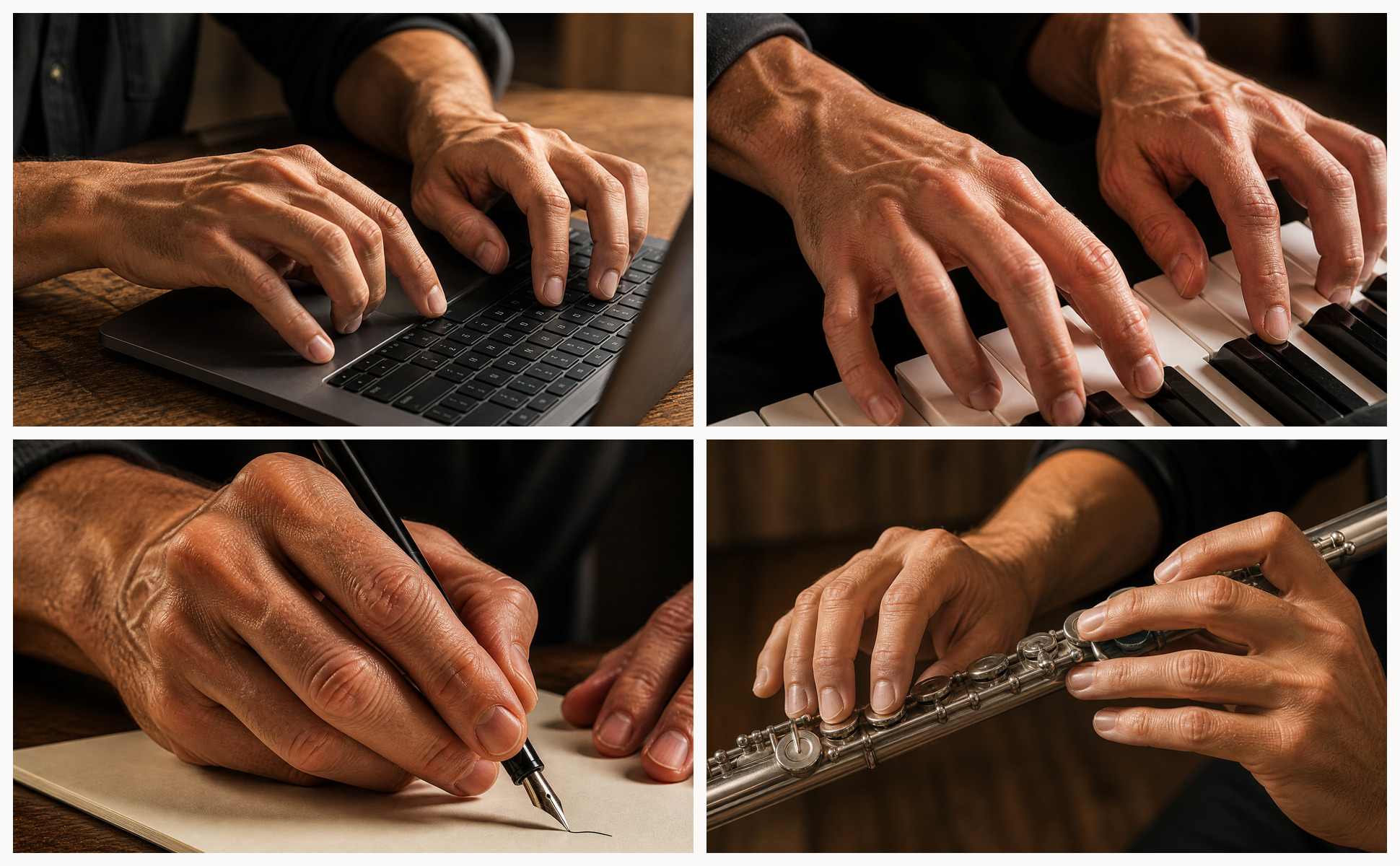
The Shape of Fingers: A Record of Fingers in Motion
An English Kindle visual book of 16 AI-generated close-up images studying fingers in motion, pressure, flattened fingertips, light, and shadow.
View on Amazon.com ↗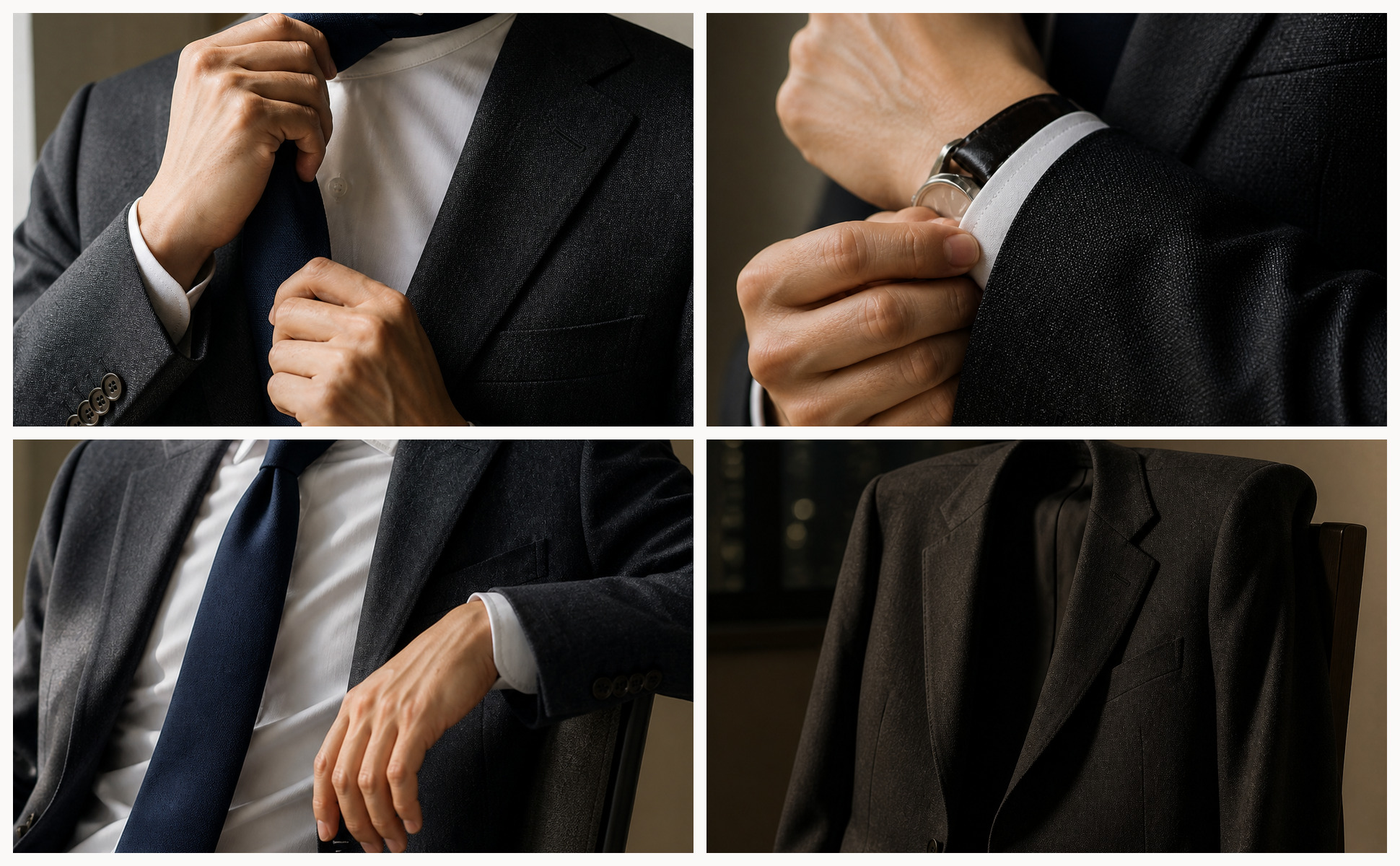
02 / CLOTH
The Shape of a Suit: Cloth and the Body
An English Kindle visual book of 16 AI-generated images studying tailored wool, lapels, cuffs, creases, tension, slack, texture, and shadow.
View on Amazon.com ↗03 / HANDS
The Shape of Hands: A Day in a Man's Hands
An English Kindle visual book of 16 AI-generated images following an adult man's hands through everyday actions, side light, tendons, veins, and shadow.
View on Amazon.com ↗